Why Claim Cause Matters in Beaumont
A damaged boat does not automatically tell you which part of an insurance policy may apply. The key question is often how the damage happened. Comprehensive coverage commonly addresses certain losses other than collision, while collision coverage generally concerns impact with another object or a capsize, subject to the policy’s definitions, exclusions, deductibles, and conditions. For a Beaumont boat owner, a storm-damaged vessel near the Neches River and a boat that strikes a submerged object can look similarly costly but involve different claim questions. The examples here are hypothetical, not coverage promises. The actual contract and the facts of the event determine how an insurer evaluates a claim.
What Comprehensive and Collision Usually Mean
Comprehensive and collision are common labels for physical-damage coverages, but they are not universal definitions. Comprehensive coverage may apply to specified non-collision causes such as theft, fire, vandalism, or certain weather-related damage, depending on the contract. Collision coverage may address accidental impact with another boat, a dock, a fixed object, or an underwater hazard, as well as some overturning losses if the policy says so. A deductible is the amount the insured may have to pay toward a covered loss before benefits apply. Read the declarations and full policy wording rather than relying on a label alone. Also check whether coverage applies to the hull, motor, equipment, trailer, and permanently attached accessories.
A Storm-Damaged Boat: A Possible Comprehensive Scenario
Imagine a Beaumont-area boat secured at a dock when a strong storm pushes debris through the marina. A branch falls onto the boat, cracking the windshield and damaging the console, while no vessel-to-vessel impact occurs. A policy might treat accidental falling-object damage as a comprehensive-type loss, but the specific wording and any relevant exclusions control. Wind, flooding, storm surge, and water intrusion can be treated differently across contracts, so the word “storm” alone does not settle the question. The owner should photograph the boat before moving damaged parts, record the date and location, and save marina notices or weather information. Promptly report the loss and ask how the policy classifies the documented cause.
Striking a Dock or Submerged Object
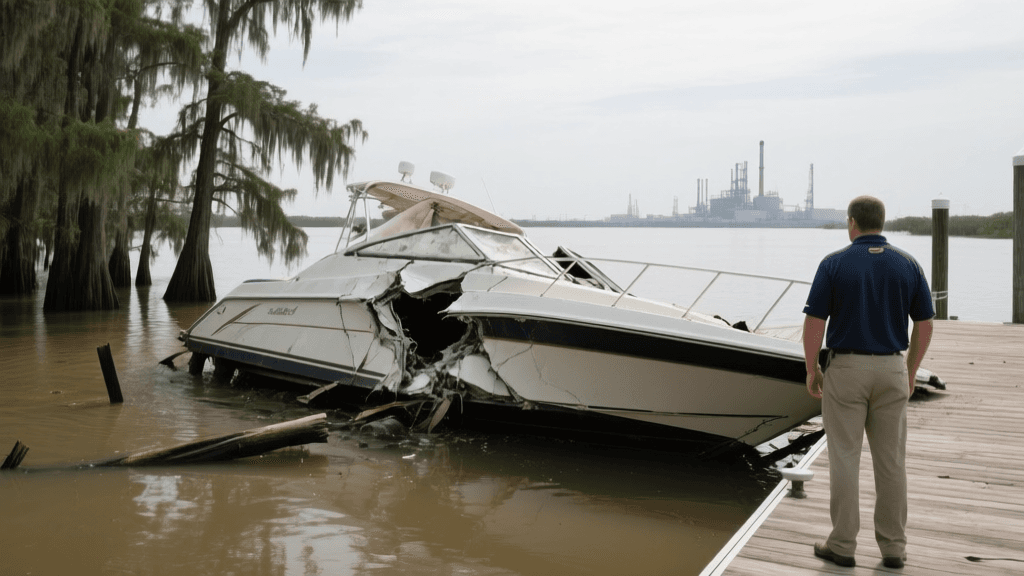
Consider a separate hypothetical: while maneuvering near a launch or marina, a boat operator misjudges the approach and hits a dock, damaging the hull and lower unit. This is the kind of direct impact commonly associated with collision coverage, although the insurer will still examine the contract and facts. A strike against a submerged obstruction in the Neches River or a nearby waterway may raise additional questions about the object, speed, visibility, and whether the damage resulted from one event or a pre-existing condition. Note the precise location, take photos from safe positions, and collect witness names. Do not assume that every underwater impact is covered; exclusions, navigation limits, and maintenance conditions may affect the review.
Capsizing, Fire, Theft, and Other Gray Areas
Some claims do not fit a simple everyday description. A boat that capsizes in rough water may be considered under collision coverage by one policy, while another contract may define or handle overturning differently. An electrical fire at a dock may point toward comprehensive coverage, but investigators may need to distinguish an accidental fire from a mechanical failure or gradual deterioration. If equipment disappears from a boat stored in Vidor or Nederland, the policy may require evidence of theft and may limit coverage for portable property. Keep receipts, serial numbers, maintenance records, and photographs of installed equipment. For any ambiguous event, describe what happened accurately and let the adjuster apply the policy terms rather than guessing at the coverage category.
How to Document a Boat Claim
Good documentation can help establish what happened and what property was affected, though it cannot guarantee coverage. Start with wide and close-up photographs, including the vessel’s overall condition, damage, registration details, and the surrounding scene when safe. Write down the time, location, weather, route, operator, and sequence of events while details are fresh. Save repair estimates, marina communications, towing invoices, and receipts for temporary steps taken to prevent further damage. Avoid discarding damaged components until the insurer says they are no longer needed. If another person or vessel was involved, exchange information and gather witness contacts without admitting fault or speculating about the cause. Follow the policy’s notice and cooperation requirements.
Local Factors Around Beaumont and Nearby Waterways
Beaumont boaters may use the Neches River, the Sabine River system, and coastal-access routes where weather, changing water conditions, commercial traffic, and debris can affect boating risks. A claim could occur at a private dock, during a launch, or while underway, and the location may help explain the event without deciding coverage by itself. Owners in Port Arthur, Bridge City, Orange, Groves, and Port Neches may also have different storage and navigation circumstances to consider. Check the policy for navigation territory, lay-up requirements, storm precautions, and any limits on where the vessel may be operated or stored. These details are especially important when a boat is moved between inland waters and coastal areas.
Useful Claim-Preparation Takeaways
- Identify the physical event first: impact, theft, fire, weather, or another cause may lead to different coverage questions.
- Read the definitions, exclusions, deductible, and navigation limits in the actual policy instead of relying on coverage labels alone.
- Photograph damage and the scene safely, then keep repair estimates, receipts, maintenance records, and witness information.
- Report the loss promptly and provide a factual timeline; do not make assumptions about fault or promise that a loss is covered.
- Ask the insurer to explain any classification decision by referring to the applicable policy wording.

Next Steps Before and After a Loss
Before the next outing, review the policy declarations and the sections describing physical damage, deductibles, exclusions, navigation territory, and claim duties. Confirm whether the hull, outboard, trailer, safety equipment, and electronics are insured as expected, and ask how accessories or personal property are treated. After damage occurs, prioritize safety, prevent additional harm when reasonable, document the facts, and notify the insurer using the process stated in the contract. If the coverage decision is unclear, request a written explanation that identifies the relevant wording and the facts considered. Comparing policy terms before choosing coverage can help Beaumont boat owners understand potential gaps, but only the issued policy and the circumstances of a particular loss determine the outcome.
Review Your Boat Coverage Before Your Next Trip
Compare policy definitions, deductibles, exclusions, and navigation limits so you understand how a future claim may be evaluated.
Get a Free Quote