Collision and Comprehensive Coverage: The Basic Difference
If your boat is damaged, the cause of the loss usually determines whether collision or comprehensive coverage may apply. Collision generally addresses accidental impact with another boat, a dock, a submerged object, or another fixed object. Comprehensive, sometimes called other-than-collision coverage, may address covered losses such as theft, fire, vandalism, or certain weather-related damage. Neither label guarantees payment: the policy wording, exclusions, deductible, and circumstances of the incident matter. For boat owners in Beaumont, knowing the distinction can help when reviewing a policy before a trip on nearby waterways or after returning to a storage location. This guide explains the practical differences and the questions to ask.
Why the Distinction Matters Around Beaumont
Boating around Beaumont can involve changing weather, busy launch areas, docks, trailers, and shallow or unfamiliar water. A collision claim might follow a hard impact while maneuvering at a ramp or striking an object that was difficult to see. A comprehensive claim could involve a covered fire while the boat is stored, theft of the vessel or equipment, or damage caused by a qualifying weather event. Southeast Texas also experiences heavy rain and tropical weather, but a policy does not necessarily cover every storm-related loss. Flooding, wind, named storms, and damage caused by poor maintenance can be treated differently under policy terms. The cause and timing of damage should be documented carefully rather than assumed from the appearance of the damage alone.
What Collision Coverage May Apply To
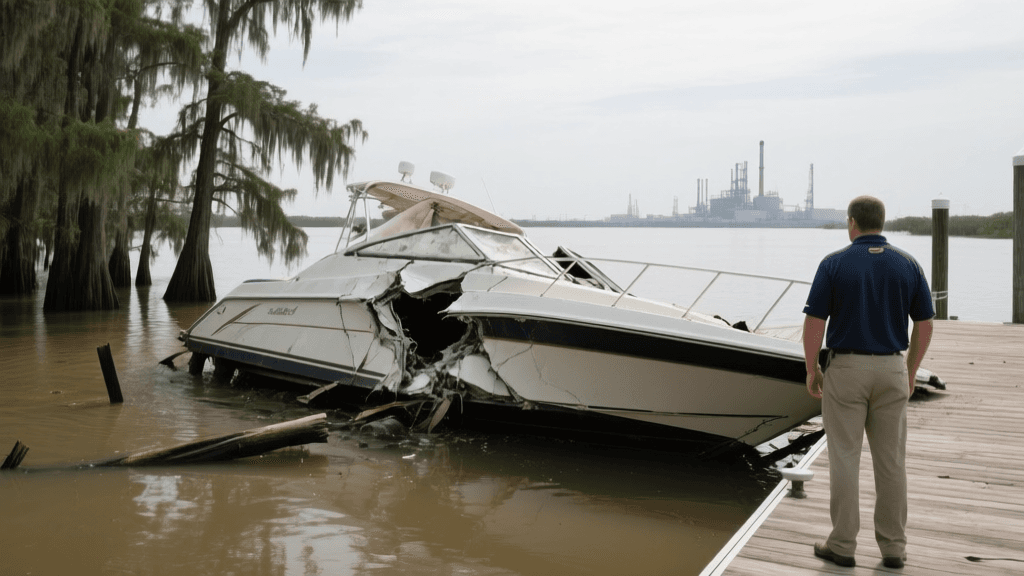
Collision coverage is designed for accidental physical damage when the insured boat hits something or is hit in a collision. Imagine a Beaumont-area boater misjudges distance while docking and damages the hull against a piling. Or a boat strikes a submerged object during a trip, damaging the lower unit. Those incidents may fit a collision definition, subject to the policy’s terms and deductible. Coverage may extend to specified parts of the boat and listed equipment, but limits can differ for the hull, motor, trailer, and accessories. Check how the policy treats damage while the boat is being transported or launched, whether a deductible applies per occurrence, and what evidence the insurer needs. Keep photos, repair estimates, and incident details.
What Comprehensive Coverage May Apply To
Comprehensive coverage may apply when damage results from a cause other than collision and the loss is not excluded. Examples can include theft, attempted theft, vandalism, fire, or certain falling objects. Some policies may cover specific weather damage, while others include special limits, conditions, or exclusions for windstorms, hurricanes, named storms, or water intrusion. Coverage for personal property and fishing equipment may also be limited or require separate scheduling. If a boat is kept in Beaumont, Nederland, Vidor, or another nearby community, consider how it is secured and where it is stored when not in use. Ask whether locks, alarms, covered storage, or prompt reporting are policy conditions, and confirm how the policy defines the insured boat and its equipment.
Deductibles, Limits, and Valuation
A deductible is the amount the policyholder pays toward a covered claim before the insurer pays the remaining eligible amount, up to applicable limits. For example, if a covered repair estimate is below the deductible, there may be no payment under that coverage. If the loss is larger, the deductible is generally subtracted from the covered amount, though claim calculations depend on the contract. Compare collision and comprehensive deductibles separately; they may differ, and a special storm deductible may apply to certain events. Also check whether settlement is based on agreed value, actual cash value, or another method. Agreed value typically sets a stated amount in advance, while actual cash value can account for depreciation. Confirm how total losses, partial repairs, and equipment are valued before choosing limits.
Exclusions and Policy-Specific Terms to Check
The word comprehensive does not mean every kind of damage is covered. Policies commonly contain exclusions or conditions involving wear and tear, gradual deterioration, corrosion, lack of maintenance, mechanical breakdown, racing, or use outside the policy’s navigation limits. A mechanical failure may be excluded even if it leaves the boat stranded, while resulting physical damage may be evaluated under separate wording. Storm provisions can include waiting periods, named-storm conditions, or requirements for securing or moving the vessel. Read definitions as well as the exclusions section, and check whether coverage applies while the boat is on a trailer, in storage, or in transit. When a clause is unclear, request a plain-language explanation and keep the answer with your policy records.
Local Considerations for Beaumont and Nearby Communities
Beaumont boat owners may store or launch their vessels in different settings, from a residential driveway to a marina or a location closer to Port Arthur, Orange, or Bridge City. That makes it important to confirm where the policy covers the boat and whether its navigation territory fits the places you actually travel. Seasonal heavy rain and tropical systems can make storage plans especially important, but a safe-storage step does not replace checking storm exclusions. Keep the boat’s registration, serial numbers, purchase records, and equipment inventory accessible. If a boat is shared between family members or kept in another household, verify that the named insureds and permitted operators are accurate. Local circumstances can inform questions, but only the written policy determines coverage.
A Practical Policy Review Checklist
Questions to Ask Before the Next Outing
- Which events count as collision, and how does the policy treat contact with submerged objects, docks, or other boats?
- Which non-collision causes are covered, and are theft, fire, vandalism, wind, flooding, or named storms subject to special terms?
- What deductible applies to each coverage, and is there a separate storm deductible or waiting period?
- How are the hull, motor, trailer, electronics, and personal boating equipment valued and limited?
- Where can the boat travel, and does coverage apply during storage, trailering, launching, and transport?
- What records and safety steps should be kept to support a claim or comply with policy conditions?

What to Do After Damage or a Suspected Loss
First, protect people and move the boat away from immediate danger if it is safe to do so. Avoid making repairs that could worsen damage, but take reasonable steps to prevent further loss when practical and allowed by the policy. Photograph the vessel, the surrounding area, damaged components, and any visible impact marks before cleanup or repairs. Record the date, location, weather, witnesses, and a clear account of what happened. Report theft or vandalism to the appropriate authorities and notify the insurer promptly using the claim instructions in the policy. Save receipts for emergency work and ask before authorizing major repairs. The insurer will assess whether the event is covered, how the deductible applies, and what documentation is needed.
Next Steps: Compare the Coverage, Not Just the Labels
When comparing boat policies in Beaumont, look beyond the words collision and comprehensive. Compare covered causes of loss, exclusions, navigation territory, deductibles, valuation method, equipment limits, and storm provisions side by side. Make sure the boat’s description, motor details, trailer, and intended use are accurate, and ask how a policy handles seasonal storage or transport. A lower premium may reflect a higher deductible, narrower terms, or lower limits, so compare the protection and the cost together. If a term is unclear, request the exact policy language and a practical example of how it could apply. Taking these steps before boating season or renewal can make it easier to choose coverage suited to the vessel and how it is used.
Review Your Boat Coverage Before the Next Trip
Compare policy terms, deductibles, and exclusions so you understand how collision and non-collision losses may be handled.
Get a Free Quote