Start With Safety, Not Cleanup
A fuel or oil spill from a boat can become a safety emergency before it becomes an insurance question. If you notice a release near Beaumont, first protect people aboard and nearby. Stop engines if doing so is safe, keep everyone away from fumes and the affected area, and eliminate ignition sources without taking risks. Do not enter the water or attempt to handle an unknown substance. A spill may be accompanied by fire, injury, a damaged fuel line, or a collision, so call 911 when there is immediate danger or someone needs urgent medical help. This guide explains the next steps, including when to notify authorities and how to preserve useful records.
Why a Small Release Deserves Prompt Attention
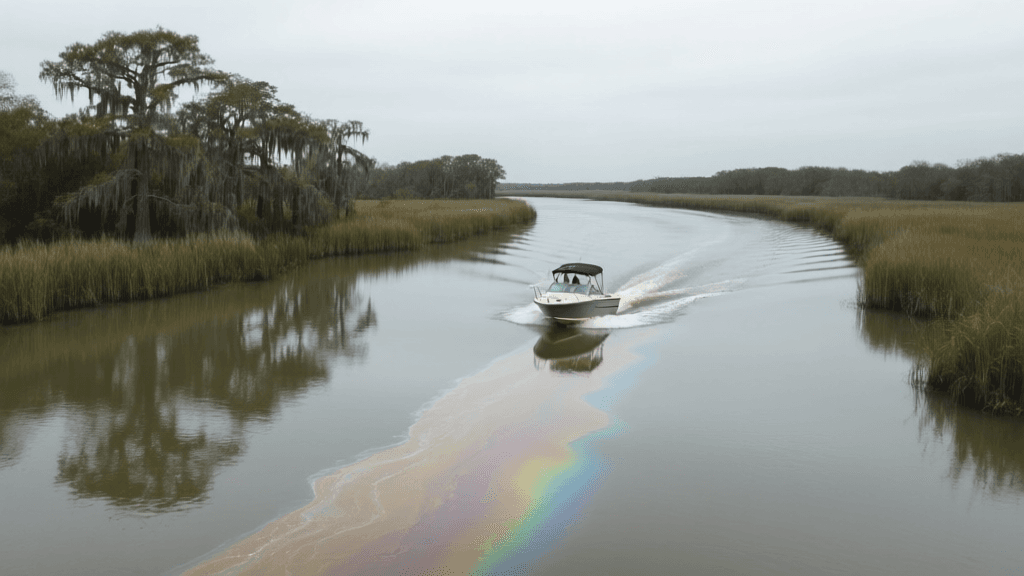
Even a modest sheen can spread across water, reach a shoreline, or affect other vessels. In the Beaumont area, boaters may be on the Neches River, nearby bayous, or waterways connected to Sabine Lake, where wind, current, and vessel traffic can quickly change where a release travels. A spill can also create fire and slip hazards around a boat or dock. Do not assume that a small amount is harmless or that it will disappear without consequence. The amount released, location, substance, and threat to people or the environment can affect which response steps are appropriate. Report what you know accurately, and let trained responders or environmental authorities determine what action is needed.
Stop the Source Only If It Is Safe
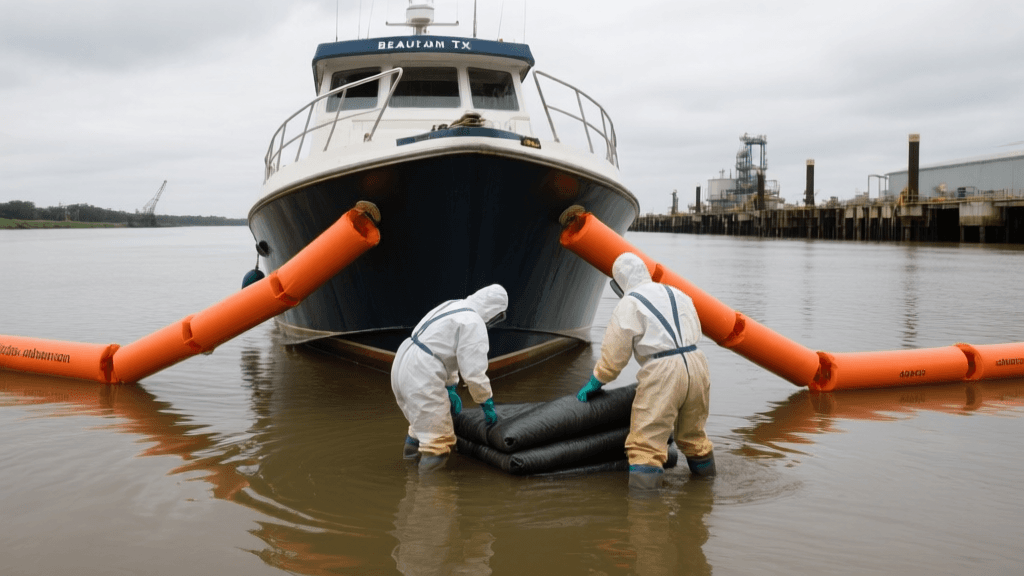
If there is no immediate threat to people and you can act without approaching fumes, fire, or moving machinery, take a simple step to prevent more product from escaping. For example, shut off a pump or engine using its normal controls, or close a readily accessible valve if you know how and can reach it safely. Do not dismantle equipment, restart an engine to test it, or use improvised materials to absorb or disperse fuel. Never wash a spill into the water or apply detergent, solvents, or other chemicals. Keep passengers and bystanders back, and avoid creating sparks. If the source cannot be stopped quickly and safely, leave it to qualified responders and focus on communicating the location and apparent source.
Notify Emergency and Environmental Authorities
Call 911 for immediate danger, fire, injury, or a situation that could threaten people or nearby property. For a pollution incident, report promptly to the appropriate state or federal authority and follow the dispatcher’s instructions. In Texas, the Texas Commission on Environmental Quality maintains a 24-hour environmental complaint and spill reporting line at 1-800-832-8224; the National Response Center can be reached at 1-800-424-8802 for reportable oil or hazardous substance releases. Reporting obligations can depend on the material, amount, location, and circumstances, so do not guess whether a report is required. Provide the facts you have, ask what information is needed, and record the time, name, and reference number for each report.
Give Responders Clear, Useful Details
When contacting responders, describe the waterway or nearest recognizable location, such as a marina, launch area, bridge, or shoreline access point near Beaumont. Explain whether the release appears to be gasoline, diesel, oil, or an unknown liquid, and give your best estimate of when it began and whether it is continuing. Mention the boat’s position, visible sheen, nearby people or vessels, injuries, fire risk, and any known source such as a damaged hose or tank. Be candid if details are uncertain; a careful estimate is more useful than an invented precise figure. Do not delay a safety call to gather measurements or photographs. Follow instructions about remaining clear, moving the vessel, and waiting for response personnel.
Document the Incident Without Creating More Risk
After immediate hazards are addressed and responders allow it, make a factual record while details are fresh. Note the date and time, the boat’s location, weather and water conditions, what you observed, actions taken, calls made, and instructions received. Photograph the vessel, damaged equipment, and surrounding conditions only from a safe position and without interfering with response work. Keep receipts for emergency services, towing, repairs, or other expenses, and preserve messages or incident reference numbers. Avoid altering damaged parts before an insurer or qualified repair professional has a chance to inspect them, unless repair is needed to prevent further harm. Do not speculate about fault or post sensitive details publicly; distinguish what you saw from what someone else told you.
Understand What Boat Insurance May Require
Boat policies differ, so do not assume that every spill-related cost is covered or excluded. Review the policy for notice deadlines, duties after an occurrence, cooperation requirements, pollution or fuel-spill provisions, liability coverage, emergency expense terms, and exclusions. A policy may require prompt notice even while the cause or total damage is still being investigated. Contact the insurer or claims administrator using the number shown in your policy documents, describe the event accurately, and ask what records and inspections are needed. Keep a note of the report date and claim number. If authorities direct cleanup or containment, follow their instructions and retain written documentation; do not hire a contractor or agree to costs based on an assumption that insurance will reimburse them.
Local Considerations for Beaumont Boaters
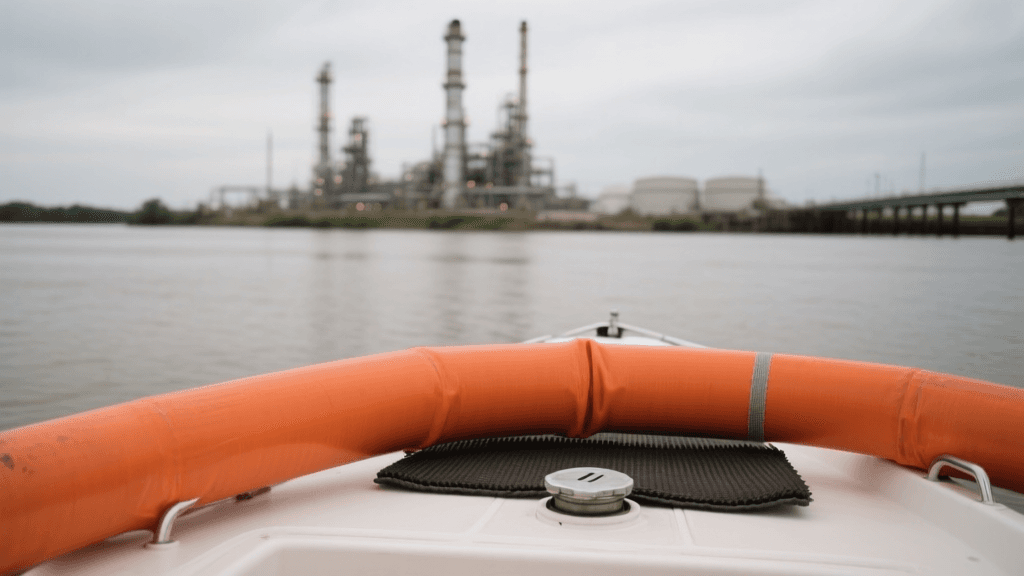
Beaumont boaters use waterways connected to a busy Southeast Texas network, and currents, weather, shoreline access, and commercial traffic can complicate a response. A release near the Neches River or a route toward Sabine Lake may be difficult to assess from the boat, so provide responders with a precise location and follow their directions rather than attempting to chase or contain a sheen. Similar care applies for boaters launching or storing vessels around Port Neches, Nederland, Port Arthur, Orange, Vidor, and nearby communities. Local conditions can shift quickly during storms or changing water levels. Check current notices and instructions from relevant authorities, marinas, and emergency personnel; this guide is not a substitute for official direction or site-specific reporting requirements.
Key Steps to Remember
A Safe, Practical Response
- Protect people first: move away from fumes, fire, and the affected water, and call 911 for immediate danger or injury.
- Stop additional release only when a control is safely accessible; do not attempt risky repairs, use chemicals, or wash product away.
- Report promptly to the appropriate authorities and follow their instructions, even if the quantity or reporting threshold is uncertain.
- Record the location, time, observed substance, actions, calls, and reference numbers after urgent safety needs are addressed.
- Notify the insurer promptly and ask about policy duties, documentation, inspections, and approval before incurring non-emergency costs.

Review Your Policy Before the Next Trip
Before returning to the water, have the boat inspected if the spill involved a suspected mechanical failure, damaged fuel system, or other equipment problem. Do not operate a vessel until it is safe and any required repairs are complete. At home, locate your declarations page, policy wording, emergency contact information, and any pollution-related endorsements so they are easy to access during a future incident. Ask an insurance professional to explain unclear terms, including how liability, pollution response, wreck removal, and emergency expenses are treated under the specific policy. Boaters in Beaumont and surrounding communities can also review fueling and maintenance routines, secure caps and lines, and keep passengers informed about basic emergency procedures.
Prepare Before Your Next Launch
Compare boat insurance options and review spill-reporting duties, liability protection, and emergency response provisions before an incident occurs.
Get a Free Quote