Start With Safety After a Boat Sinks
A boat sinking can turn a routine outing into an urgent situation, whether it happens at a Beaumont-area marina, along the Neches River, or on a nearby waterway. First, account for everyone aboard and get people to a stable, safe location. Call 911 if anyone is injured, missing, in immediate danger, or needs rescue. Do not enter the water to retrieve property, and keep others away from submerged lines, unstable debris, and the vessel itself. Once people are safe, note the boat’s location as precisely as possible and alert the appropriate marina or waterway authority. A visible wreck may obstruct navigation or pose a hazard even when it is not near a busy channel.
Why Prompt Reporting Matters in Southeast Texas
A sunken vessel can shift with currents, changing water levels, wakes, or weather, making its location and condition unpredictable. In and around Beaumont, that matters on waterways used by recreational boaters as well as commercial traffic. Fuel, oil, batteries, and other onboard materials may also escape and affect the water or shoreline. Report the incident promptly to emergency responders when there is an immediate threat, and contact the relevant local, state, or federal authority for instructions about a navigational obstruction or possible pollution. Requirements depend on the location and circumstances, so do not assume that notifying only a marina or insurer completes every reporting obligation. Ask the receiving authority what information it needs and record the time and contact details.
Contain Hazards Without Putting Anyone at Risk
If you see a sheen, fuel odor, leaking container, or floating debris, describe what you observe when reporting the incident. Do not attempt to swim to the boat, plug a leak, tow the wreck, or deploy cleanup materials unless you are trained and specifically directed to do so. A partially submerged hull may contain trapped air, sharp edges, electrical hazards, or unstable equipment. Where safe and practical, warn nearby boaters and keep a clear distance while waiting for qualified responders. Take note of wind, current, and the direction any visible material is moving, but do not put yourself or another person in danger to gather evidence. Fast, accurate information helps authorities determine whether containment, salvage, or a navigation warning is needed.
Coordinate Removal With Qualified Responders
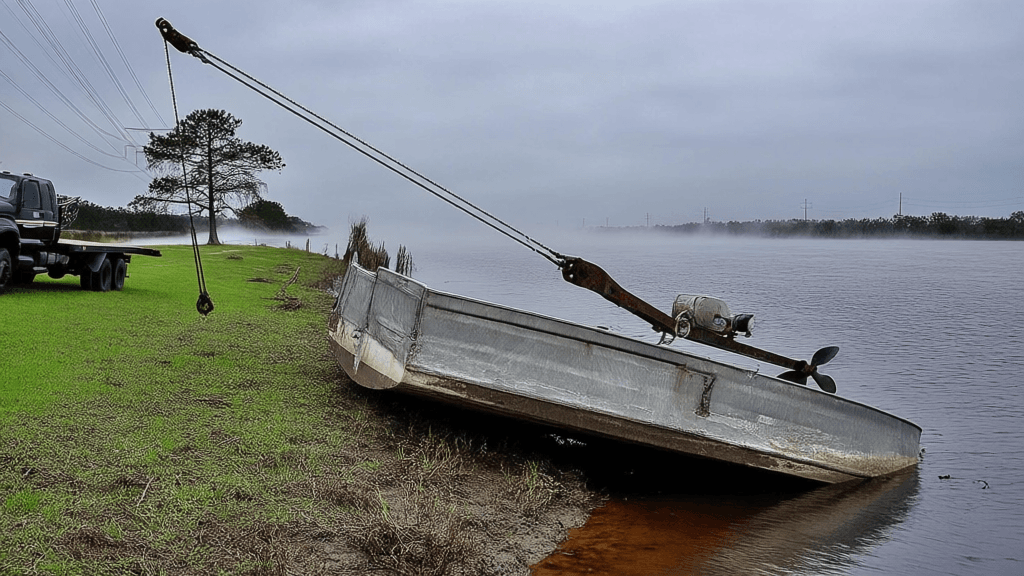
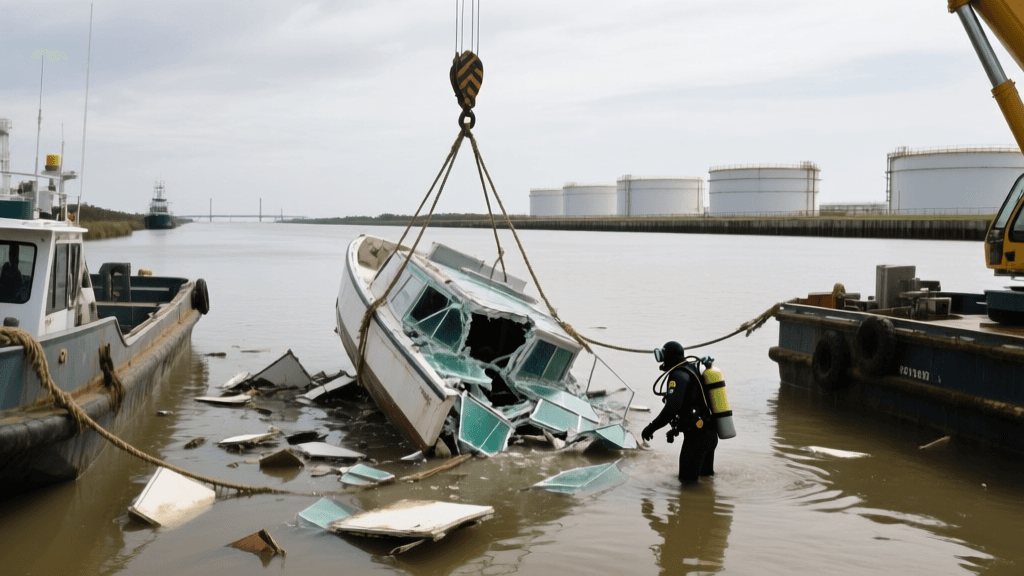
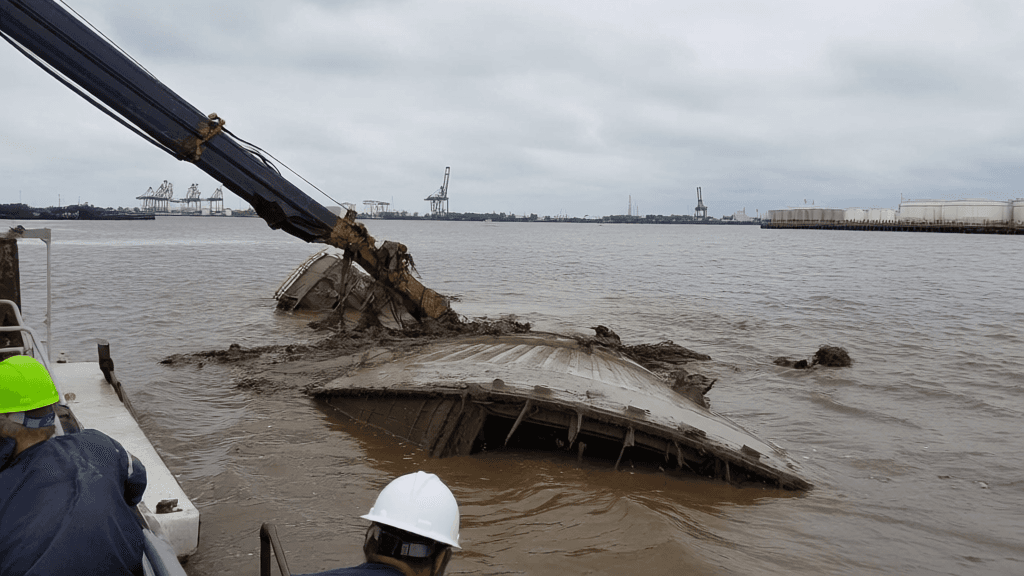
Wreckage removal is more than pulling a boat to shore. A qualified marine salvage or recovery professional can assess access, water depth, hull stability, lifting points, and the safest way to control fuel or other pollutants. Before authorizing work, ask who is responsible for coordinating the response, what equipment and permits may be needed, and how the proposed method protects nearby boats and shorelines. Share the vessel’s make, size, approximate weight, condition, and last known location if available. Avoid hiring a contractor based only on a quick verbal estimate; request written scope, pricing assumptions, and proof of appropriate qualifications and insurance. Keep communications open among the responder, marina, authorities, and your insurer so work is not delayed by conflicting instructions.
Document the Loss and Contact Your Insurer
Notify your boat insurer as soon as reasonably possible and ask what the policy requires before salvage, towing, repairs, or disposal begin. Policies differ: physical damage coverage, wreck removal, pollution-related costs, deductibles, and emergency measures may be addressed differently or subject to limits and conditions. Do not assume a particular expense is covered until the insurer reviews the facts and applicable policy language. Save photos and video taken from a safe place, the approximate time and location, weather conditions, witness names, authority case or report numbers, and receipts for urgent expenses. Keep copies of written estimates and contractor communications. If the vessel is inaccessible, document what you can without disturbing the scene; the insurer or adjuster can advise on additional evidence.
Local Considerations Around Beaumont
A response plan in Beaumont may differ depending on whether a boat sinks at a private dock, a marina, or on a navigable waterway. The Neches River and connected waterways can bring changing currents, vessel traffic, and access constraints into the recovery plan. Conditions may also change quickly during heavy rain or storms, so a location that appears manageable at first can become harder to reach. Owners in nearby Vidor, Port Neches, Nederland, Groves, and Port Arthur should identify the exact waterway and nearest launch or access point when making a report. Share landmarks, dock or slip information, and coordinates if available. Local responders and authorities can clarify who has jurisdiction and what steps are appropriate for that specific site.
Keep the Recovery Organized
Useful Information to Gather
- Record the vessel’s location, date and approximate time of sinking, and any known cause without guessing about facts that remain uncertain.
- Provide responders with boat identification, size, fuel type, passenger status, and details about visible leaks or floating debris.
- Save photographs, witness contacts, official report numbers, insurer claim information, estimates, invoices, and written instructions in one place.
- Ask the insurer and relevant authorities before authorizing non-emergency removal work, while following any immediate safety or pollution-control directions.
- Keep a written log of calls, names, dates, and agreed next steps so several parties can coordinate without relying on memory.

Plan the Next Steps Carefully
After immediate danger is addressed, confirm who will manage the recovery, who must be notified, and what approvals are needed before work starts. Ask the insurer how to submit the claim, whether an adjuster needs to inspect the boat, and how emergency expenses should be documented. Get the salvage plan and cost estimate in writing, and clarify whether the quoted amount includes containment, lifting, transport, storage, and disposal. If the vessel has been removed, keep records of its destination and any remaining cleanup or repair decisions. Boat owners can also review their current policy before the next outing, paying particular attention to applicable limits, exclusions, emergency assistance, and wreck-removal language. Careful coordination helps protect people and waterways while reducing avoidable confusion during a stressful event.
Review Your Boat Coverage Before the Next Trip
Compare policy terms and ask a licensed insurance professional how salvage and wreck-removal costs may be addressed.
Get a Free Quote